
YouTube’s 2026 Roadmap: What Brands and Creators Need to Know
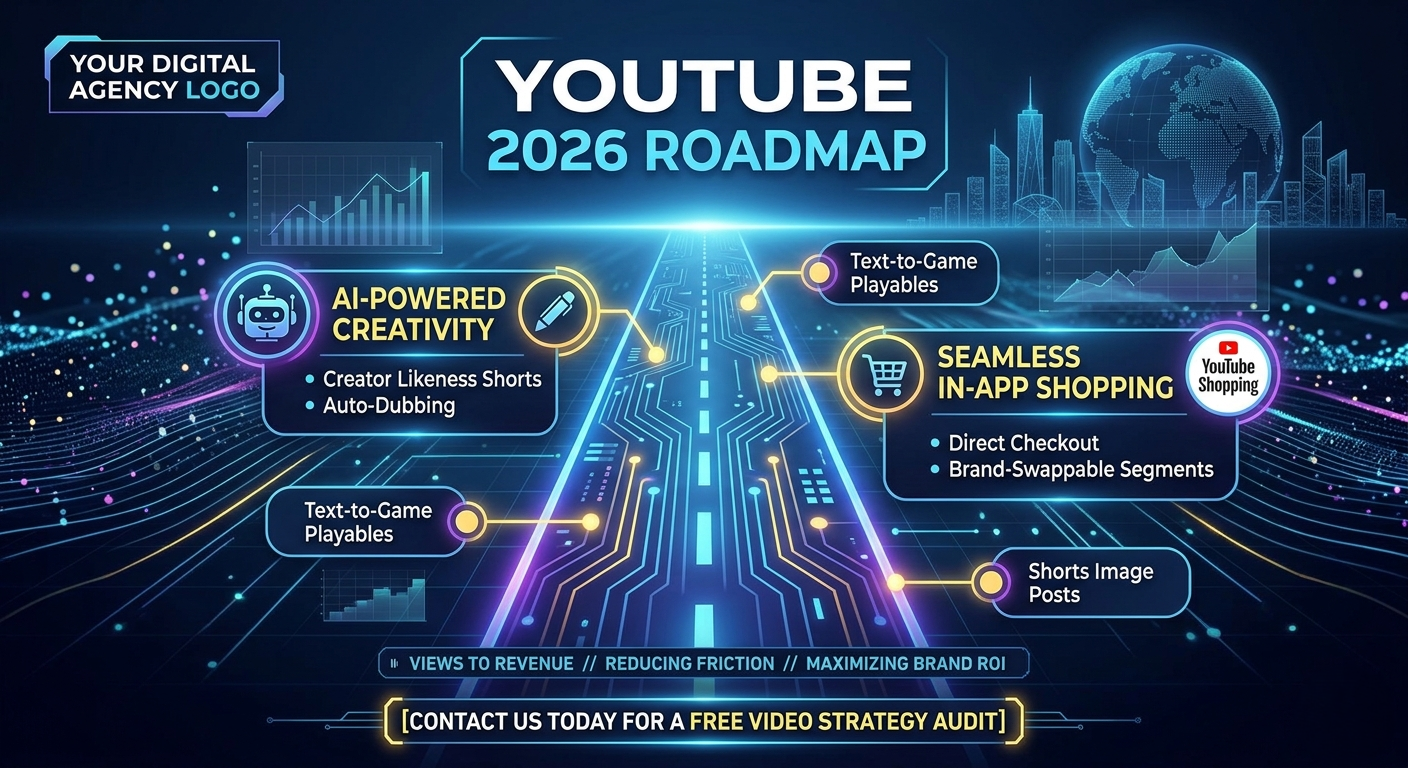
The digital landscape just shifted again. YouTube CEO Neal Mohan recently released his annual letter, outlining the platform’s priorities for 2026. For digital marketers, brand managers, and creators, the message is clear: YouTube is no longer just a video hosting site—it is becoming an AI-powered production house and a full-funnel e-commerce powerhouse.
If you’re looking to stay ahead of the curve, here are the four major shifts coming to YouTube this year and how they will impact your digital strategy.
1. The Rise of “In-App Checkout”: The Death of Friction
The biggest news for brands is the expansion of YouTube Shopping with in-app checkout. Soon, viewers won’t have to click a “link in description” or be redirected to an external site to buy a product. They can complete the entire transaction without leaving the video.
The Opportunity: This significantly reduces “bounce rates” and friction in the buyer’s journey.
The Strategy: Brands should prioritize YouTube-specific inventory and ensure their product feeds are optimized for YouTube’s AI-powered tagging system.
2. AI as a Creative Partner (Not a Replacement)
YouTube is doubling down on AI creation tools, moving beyond simple editing to high-level generative features:
Likeness-Based Shorts: Creators will be able to generate Shorts using their own digital likeness.
Text-to-Game: The “Playables” program will allow users to generate interactive games via text prompts.
Auto-Dubbing: With 6 million daily viewers already consuming autodubbed content, global reach is no longer limited by language barriers.
Agency Insight: Use these tools to scale content production. For example, a single video can now be localized into dozens of languages via auto-dubbing, instantly expanding your brand’s Total Addressable Market (TAM).
3. Shorts Get “Instagrammable” with Image Posts
In a move that brings YouTube closer to the functionality of Instagram, image posts are coming to the Shorts feed. With Shorts averaging 200 billion daily views, the inclusion of static imagery allows brands to maintain a presence in the feed without needing high-production video for every single post.
Why it matters: This allows for better storytelling, “behind-the-scenes” photography, and quick-turnaround promotional graphics within the most-watched section of the app.
4. Maximizing ROI with “Swappable” Brand Segments
For years, the downside of influencer marketing was that a sponsored segment was “baked into” the video forever. YouTube is introducing a feature that allows creators to swap out branded segments in their back catalog.
The Impact: This turns old videos into recurring revenue streams for creators and “evergreen” ad slots for brands. You can now sponsor a creator’s most popular video from 2024 with a fresh 2026 offer.
The Bottom Line
YouTube’s 2026 strategy is built on two pillars: AI-driven creativity and seamless commerce. As the platform integrates more “bottom-of-the-funnel” features like in-app checkout, the ROI of video marketing will become more transparent and easier to track than ever before.
Is your brand ready for the 2026 YouTube shift? At [Your Agency Name], we specialize in staying ahead of these platform updates so you don’t have to. From AI-optimized content to YouTube Shopping integration, we help you turn views into revenue.