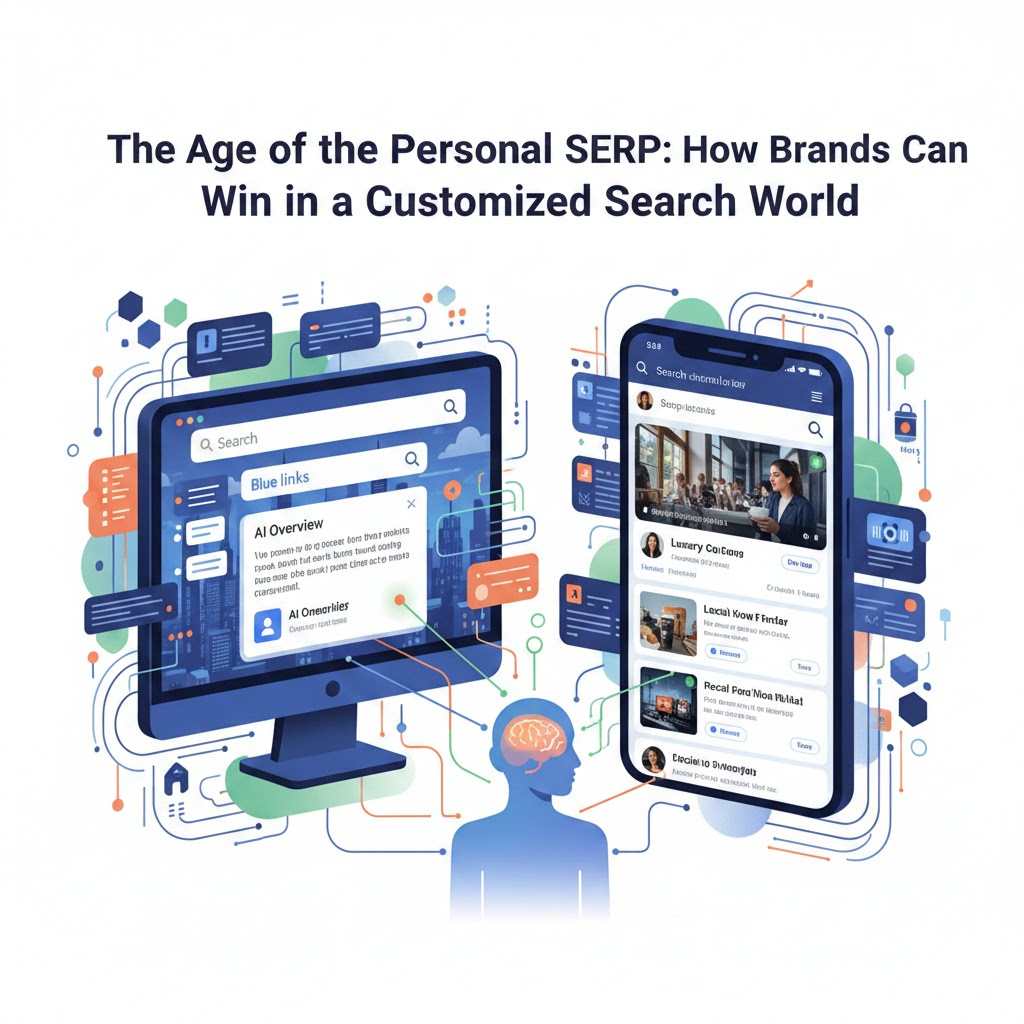
In the early days of the internet, if two people searched for the same keyword, they saw the exact same results. Today, that is a relic of the past. As search engines and AI platforms become more sophisticated, the results page (SERP) has become a reflection of the individual user rather than just the query itself.
For brands, this shift presents a challenge: How do you maintain visibility and a consistent brand voice when every potential customer sees a different version of the internet?
How Search Engines Tailor Your Experience
Search engines use a variety of “signals” to determine what you see. These include:
- Behavioral Data: Your past search history and click patterns.
- Contextual Signals: Your physical location, the device you’re using (mobile vs. desktop), and your language settings.
- AI Memory: Modern platforms like ChatGPT, Claude, and Google’s Gemini now use “session-based memory,” meaning the context of your previous questions influences the next answer you receive.
- Entity Recognition: Google tries to understand who or what a brand is. If a search engine understands your brand as a “luxury entity,” it will surface you to users interested in high-end goods.
The Rise of AI Overviews
The article highlights that we are moving from a list of “blue links” to AI-generated summaries. Google’s AI Overviews often appear at the very top, pushing traditional URLs further down. To be featured in these summaries, brands must focus on factual accuracy, clear site structure, and strong entity signals.
6 Strategies for Brands to Manage Personalization
Personalization can lead to higher conversion rates and better engagement, but only if brands manage it correctly. Here is how to turn personalization into a competitive advantage:
1. Break Down Internal Silos
losAccording to Cano, “Conway’s Law” suggests that organizations design systems that mirror their own communication structures. If your SEO, Social, and PR teams don’t talk, your brand signals will be fragmented. Ensure all teams share the same data and objectives.
2. Strengthen Technical Foundations
To avoid “entity drift” (where search engines get confused about your brand identity across different markets), you must use:
- Schema Markup: Provide clear, structured data so AI knows exactly what your content is about.
- Clean URL Structures: Make it easy for bots to crawl and categorize your site.
- Hreflang Tags: Ensure the right language version of your site reaches the right regional user.
3. Focus on Topic Clusters, Not Just Keywords
Don’t just chase high-volume keywords. Organize your content into “clusters” that cover a topic in depth. This helps search engines understand your authority on a specific subject, making you a more likely candidate for personalized recommendations.
4. Leverage First-Party Data
Use your own data (from logged-in users or internal site searches) to personalize the experience on your own site. When you provide relevant product recommendations or dynamic filters based on a user’s behavior, you reinforce the positive signals that search engines look for.
5. Maintain Cross-Channel Consistency
Your brand voice, messaging, and USPs (Unique Selling Propositions) should be identical whether a user finds you on TikTok, an AI summary, or an email newsletter. Fragmentation leads to a loss of trust.
6. Prioritize Brand Perception (Digital PR)
Visibility isn’t just about SEO; it’s about being referenced positively across the web. Published research, statistics, and mentions in reputable publications help “train” AI models to associate your brand with authority and trust.
The Bottom Line
Success in the modern search landscape is no longer just about optimizing for Google. It’s about understanding the user’s intent and ensuring your brand is consistently represented across every digital touchpoint. In a world where every search result is unique, the most consistent and well-structured brands will be the ones that stay visible.